
In Capital, Marx argues that the tendency toward the centralization of capital is a contradictory phenomenon that reflects capitalism’s fundamentally contradictory nature. He saw capitalism as a system that, on the one hand, liberated humanity from the darkness of slavery, feudalism and religious backwardness; and, on the other, enslaved the toiling masses to exploitation and […]
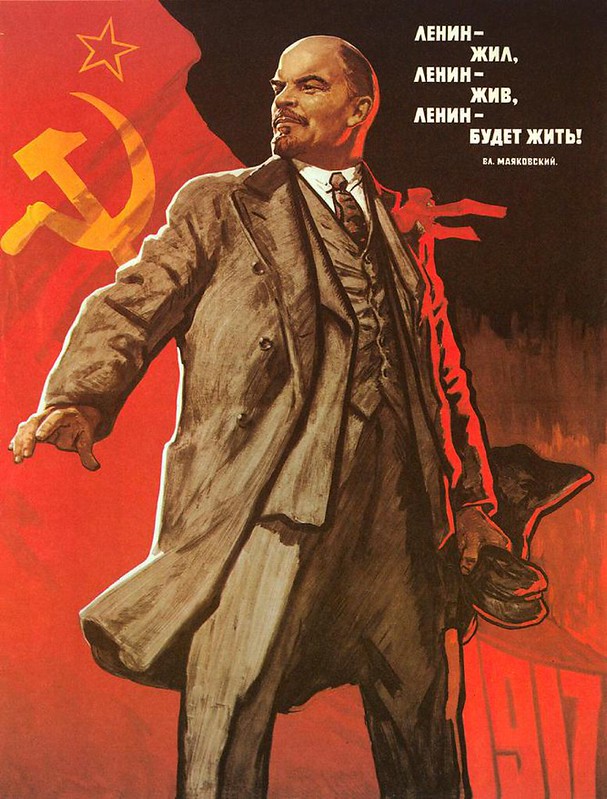
“The question is: what means other than war could there be under capitalism to overcome the disparity between the development of productive forces and the accumulation of capital on the one side, and the division of colonies and spheres of influence for finance capital on the other?” —V.I. Lenin, Imperialism The sanctions on Russia for […]
In David Harvey’s early work The Limits to Capital, he develops the foundations of his spatial analysis of capitalism through a reading of all three volumes of Karl Marx’s Capital. This post focuses on the sections devoted to the centralization of capital and finance capital. While Harvey provides a series of insightful analyses regarding the […]
Two of the more offbeat and interesting Federal Reserve analysts these days are Jeffrey P. Snider, Head of Global Research at Alhambra Investments, and Joseph Wang, author of the self-published book Central Banking 101. Both authors seek to unearth the complexity and mystique of this ostensibly powerful capitalist institution (Snider through his blog and Wang […]
In this post, I provide some speculative thoughts and questions on the nature of fictitious capital. I have only read Marx’s incomplete discussion of the concept in Capital and listened to David Harvey’s discussion in his Volume II class, so these thoughts will not take into account most current research on the topic. The best […]
Categories
Capital Volume II: Class 11
Readings: Capital II, ch. 20 (sections 6-13), 21 Returning to a point I have made multiple times, the implication of Marx’s theory in Capital is that the anarchic capitalist system needs to be replaced with an egalitarian, planned economy. His project is to render visible all of the hidden and ignored inefficiencies in capitalism so […]
Categories
Capital Volume II: Class 10
Readings: Capital II, ch. 18, 19, 20 (sections 1-5) Part Three of Volume II develops in greater detail the concept of reproduction, originally introduced in Volume I. In my notes on Volume I, I wrote that reproduction refers to how the capitalist system is sustained. In this section of Volume II, Marx delves into exactly […]
Categories
Capital Volume II: Class 9
Readings: Capital II, ch. 15-17 “If we were to consider a communist society in place of a capitalist one, then money capital would immediately be done away with, and so too the disguises that transactions acquire through it. The matter would be simply reduced to the fact that the society must reckon in advance how […]
Categories
Capital Volume II: Class 8
Readings: Capital II, ch. 12-14 The total turnover time of capital is equal to the sum of the production time and the circulation time. Production time can be further broken down into the working period and the period of production during which no labor is done. During the non-working period, constant capital undergoes natural processes […]
Categories
Capital Volume II: Class 7
Readings: Capital III, ch. 36, 27-32 I have yet to find a place in Volume III where Marx explicitly defines fictitious capital. This may be a result of the unfinished nature of Part Five of this volume, or an oversight on my part. The closest I have found is his reference to fictitious capital as […]
 World of Lenidzky