
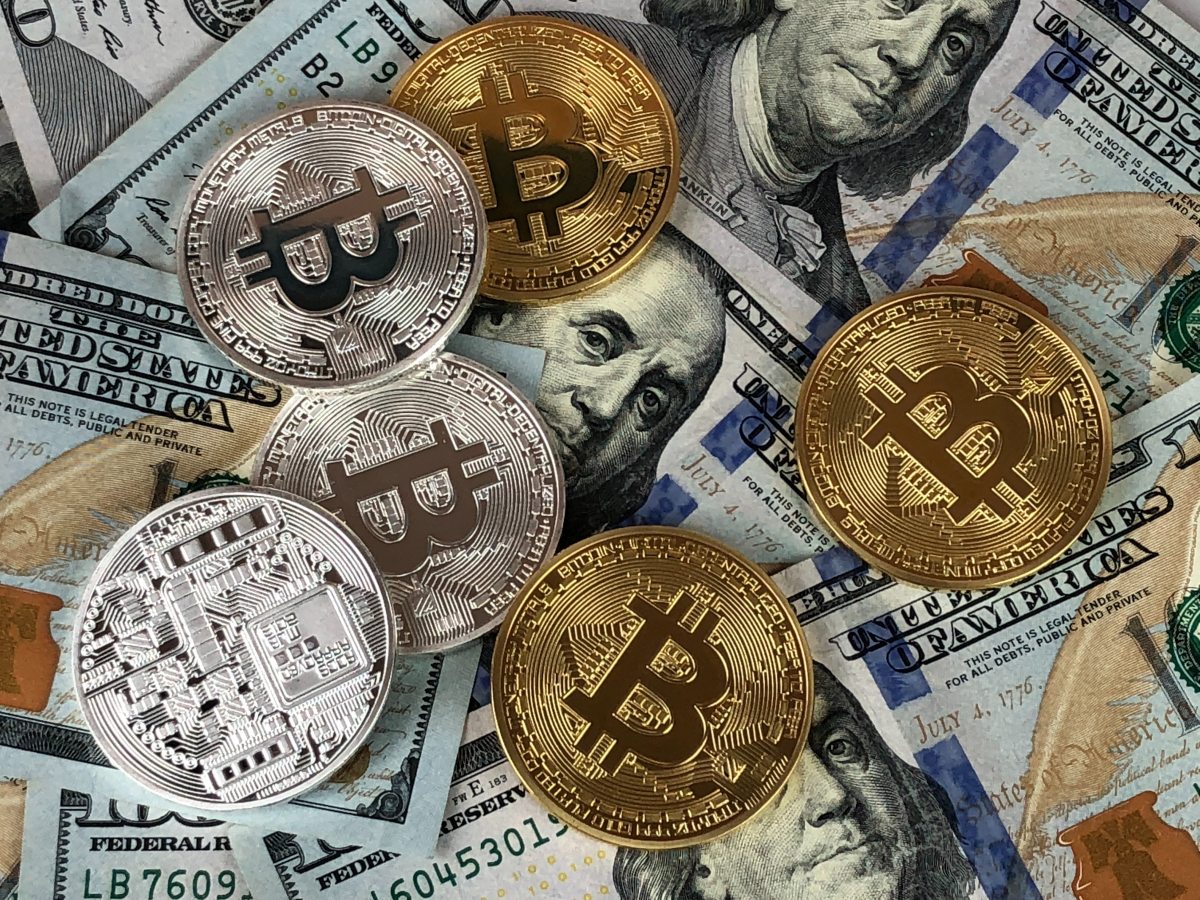
Bitcoin has acted as an index of uncertainty since its inception. It was born out of the financial crisis of 2007-09 with a message embedded in the genesis block referencing the instability of the financial system: “The Times 03/Jan/2009 Chancellor on brink of second bailout for banks.” As the financial systems of the imperialist countries have become more and more unstable over the ensuing dozen years, Bitcoin has seen greater and greater adoption to the point where it is now becoming a mainstream store of value. While Bitcoin may provide people in chaotic economic circumstances with a life raft to get through periods of financial instability, it is ultimately just that—a life raft. It is not stable ground that can serve as the foundation for an abundant and egalitarian society.
The story of Bitcoin’s success goes deeper than the financial system, to the heart of western—and particularly American—capitalist society. Civic trust is at extreme lows, as just 20 percent of Americans say they trust the federal government; suspicions of technology oligarchs like Jeff Bezos and Mark Zuckerberg, who have outsized roles in many people’s lives, run high; trust of the police, especially by black and brown people, has been decimated as cop terror has overwhelmed many cities; and trust in the bourgeois media has begun to crater, as the likes of Fox News, CNN and MSNBC compete to promulgate more and more outlandish conspiracy theories about their counterparts on the left or right. Indeed both left and right have had their respective uprisings over the past year with the protests against police terror during the summer of 2020 and the storming of the Capitol by right-wing mobs on January 6, 2021. To sum up, many young people have realized that the “American Dream” is a load of bullshit that the decaying ruling class institutions continue to push on us like crack, as most of us know that there are no good jobs out there for us and that we will have lower living standards than our parents.
Into this epic breach steps Bitcoin, a commodity that many perceive to embody the trust, stability and hope that is so lacking in society. Its most important intrinsic qualities are its state-of-the-art cryptography, a tool that, importantly, one only needs when trust is lacking; and its decentralized structure, which displaces the untrusted banking and governmental institutions with a vast network of nodes that are incentivized to behave in a predictable, trustworthy manner. But in addition, Bitcoin’s entire protocol is based on stability, predictability and openness. It is open-source code that can be edited and forked by anyone at any time; it has a stabilized developer community and now a massive global network of users; scarcity, which is achieved by its four-year halving cycles with supply topping out at 21 million bitcoins in the year 2140, is embedded directly in its code; and the system has predictably produced a definite quantity of bitcoins on average every ten minutes for its entire twelve-year lifespan. One can, at any time, view the Bitcoin blockchain and see the different transactions being made in real time. The openness of the blockchain is complemented by the pseudonymity of the public key system, ensuring a balance of objectives that seems to have resonated with many people at this particular historical moment.
I have seen no serious argument as to why any of this will change any time soon, largely because of the network effects that have created facts on the ground. Yes, there will always be speculation about a possible 51-percent attack by some government or secret quantum computer and there very well may emerge an even better cryptocurrency protocol that leaves Bitcoin in the dust. But these are still black swans. The reality is that as computers get more and more powerful, all the evidence indicates that their power will be harnessed for legitimate crypto mining. Given Bitcoin’s rising price, there is a strong incentive to do so. Therefore, I do not think increasing computing power necessarily increases the risk of a 51-percent attack. Will a better protocol emerge and displace Bitcoin? It is certainly possible. In fact, there could be one out there now. But Bitcoin has scaled to such an extent that there are strong forces working against the mass adoption of other cryptocurrencies as a similar form of “digital gold.”
While Ethereum and other more expansive cryptos have yet to stabilize in the same way as Bitcoin, they are similarly perceived by people to offer the potential for liberation from the oppressive institutions that dominate our lives. The disintermediation potential of smart contracts, NFTs and other tools could spell trouble for banks, powerful law firms and rent-seeking institutions. The potential of the broader crypto ecosystem points to the possibility of a technological revolution—not a social revolution, but a reorganization of capitalism or perhaps a changing of the guard. I do not buy the libertarian hype of a crypto utopia, but this technology has the potential to change the shape of capitalism in ways that other great innovations have done many times over the past few centuries.
Where will this all go? Nobody can predict the future, but it is clear that the world is in a major transitional period. The dollar standard, that tool of U.S. imperialism, is being questioned and undermined. The dollar may lose sway in large parts of the world as China promotes the Renminbi in Asia and perhaps the Euro prevails in other places (although the prospects of the Euro itself are dim). Bitcoin could fill this vacuum, asserting its authority as the new universal equivalent for international trade. Regardless, the world is changing and it is unclear that the U.S.-dominated world order will continue when the dust settles. It is also unclear whether capitalism itself will survive. Hopefully it does not.
As an index of uncertainty, Bitcoin will do well as long as this turmoil continues. But we cannot forget that while it may feel chaotic now, there have been many stable periods—sometimes in the U.S., at other times elsewhere; and that those stable periods are characterized by the prevalence of trust and faith in centralized institutions. Once the dust settles and a new form of centralized trust congeals, will Bitcoin have a role? If people trust each other and centralized institutions, why will we need cryptography? And if we can achieve a society based on material abundance and equality in which all humans are valued, why would we need a store of value?
This is where I differ with the libertarian crypto-utopians. I cannot accept a society that is permanently locked in a Hobbesian state of nature where each individual seeks to maximize their own material interest. Winners win and losers lose. That kind of society will inevitably devolve into barbarism, as it already has. The crypto space is littered with paranoia, distrust, constant threats of cheating, the need to prepare for “attacks” by “adversaries” and above all, the notion that humans are primitive, warlike monkeys that are incapable of seeing each other as brothers and sisters. This is not at all a denigration of crypto developers—on the contrary, much of the technology they have produced is impeccable, but it is also a sign of the times.
By contrast, if humans were to be placed in conditions where they were nurtured and could grow in a collaborative society that plays to each person’s strengths, a society with no need for money, contracts or proof of ownership, i.e. communism, we would fulfill our greatest potential. There is no human nature, other than that which we create. Consciousness will change. There will be class struggle. And there will be trust again. We may have to go through hell to get there, but nature is constantly in flux.
 World of Lenidzky
One reply on “The Bitcoin Life Raft or the Terra Firma Society?”
[…] temporally contingent. This phenomenon of a fragmented financial system is one factor driving the cryptocurrency technological revolution. There is a sense that a protocol like Bitcoin can stabilize and render visible many of these […]
LikeLike